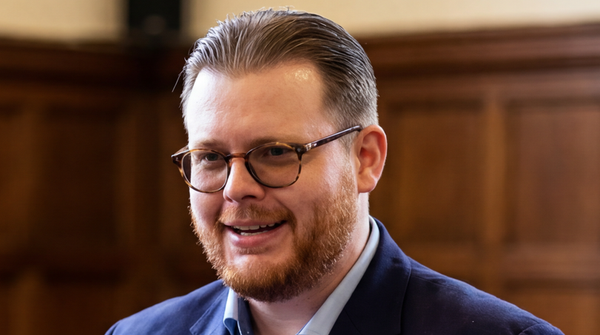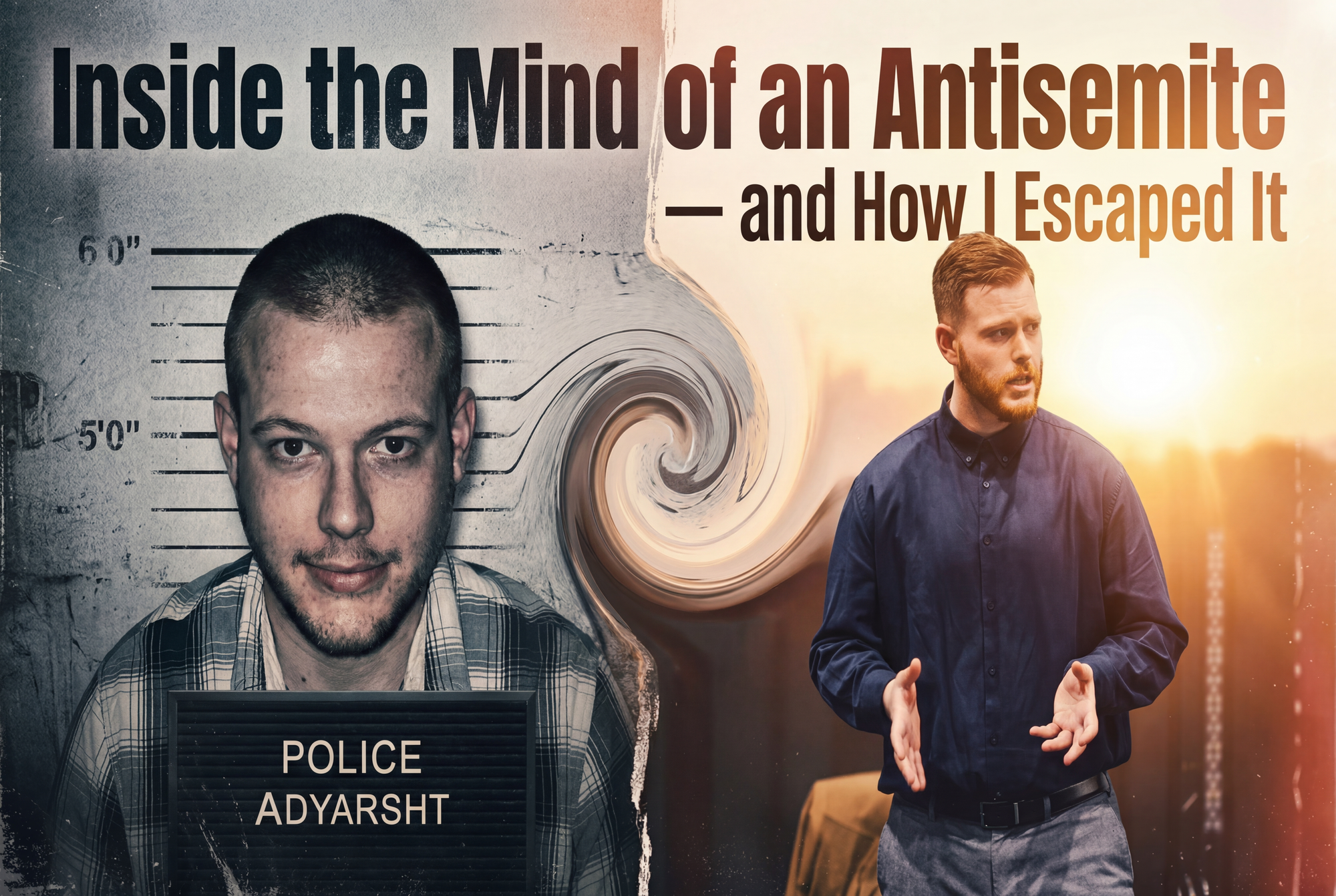

I was 21 when antisemitism ceased to be a prejudice and became my whole way of seeing the world. It turned grievance into ideology, paranoia into purpose, and hatred into identity. Prison, the Bible and a shattering encounter with reality finally broke the spell.
It did not arrive all at once. It behaved more like an infection. It attached itself to grievance, humiliation and drift. It distorted what I saw, gave me a false explanation for my failures, and slowly convinced me that I had discovered some forbidden truth. Before long, everything I looked at became evidence. Everything became connected. Everything became Jewish.
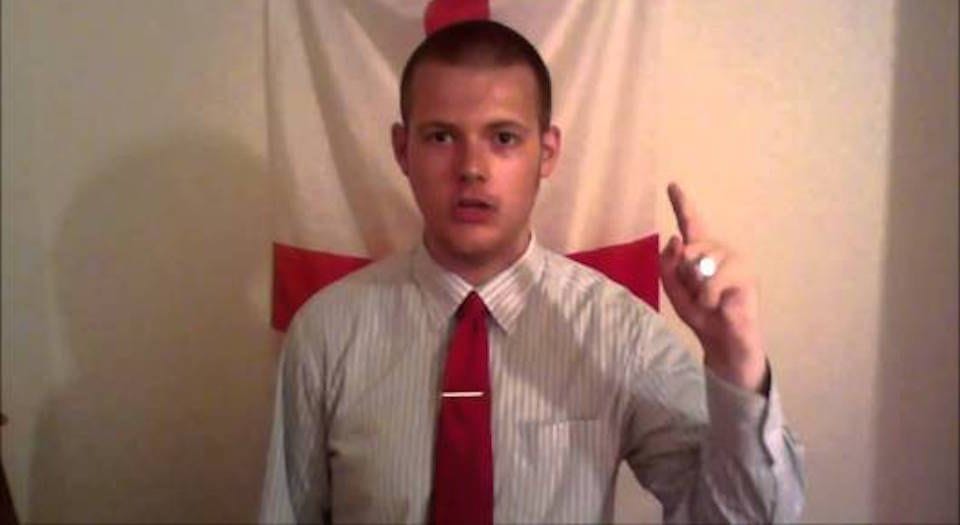
That is one of the things people still fail to understand about antisemitism. It is not just a prejudice in the ordinary sense, and it is not simply a dislike of Jews. It is a total explanatory system. It offers a villain for every disappointment, a culprit for every humiliation, an answer for every chaos. It can make a failed man feel like a prophet. It can make paranoia feel like insight.
In my own case, the ground had already been prepared. I had spent years in social services care. Three of my friends had died before the age of 21 through suicide or drug addiction. I had no job, no real direction, and no proper sense of what my future might be. That is not an excuse. It is merely the truth about the state I was in when I chose to surrender myself to that ideology. I do not blame anybody else for my antisemitism but myself. I could have done better. I could have sought discipline, work, purpose and responsibility. Instead, I chose resentment.
The shame of it is that I already knew what antisemitism was. Before that collapse, I had taken an interest in the history of the Second World War. I had watched Downfall. I had watched The World at War. I knew what Nazism was. I knew what had happened to Europe when Jews were turned into a metaphysical enemy rather than a people. I even remember, around 2013, when I was 20 going on 21, dancing in a circle in Yeovil High Street with Orthodox Jews as we sang Hava Nagila. There was no hatred in me then. That came later.
What changed was that, in my weakness, the taboo started to feel thrilling. I began to wonder whether antisemitism was forbidden not because it was evil, but because it was true. That is how the descent begins. First comes the flirtation with the prohibited. Then comes the literature, the forums, the pseudo-intellectual scaffolding, the obsessive pattern-making. You read fringe books and articles. You surround yourself with people who claim to be dissidents and truth-tellers. You begin “joining the dots” between unrelated people, events and institutions. It feels like awakening. In reality, it is submission.
By 2014, when I was 21 turning 22, I had become immersed in that world. I read conspiracy material constantly. I connected with people who openly espoused antisemitism, and it felt good, because for the first time in a long time I felt I belonged somewhere. By then I had a wide circle of friends and associates who believed the same things I did. Together we imagined ourselves to be freedom fighters resisting a hidden order that was wronging us all personally. In reality we were deluded and self-important, feeding one another fantasy and calling it courage.
My mind began to interpret almost everything I saw through the prism of Jews or Israel. I embraced boycotts of Israel and even organised demonstrations in support of Palestine. I remember inviting George Galloway to one of them. What matters is not the detail of the event, but the mentality behind it. Once someone has immersed himself in conspiratorial literature and false information, constantly stitching unrelated fragments into one imagined whole, the next stage is to begin living the ideology physically and publicly.
That is what happened to me. I no longer merely consumed these ideas. I acted on them. I began categorising people, institutions and organisations as “Jewish-run”. If one of them happened to have a Jewish person working within it, then to my diseased way of thinking that became proof of infiltration and evidence of a wider Jewish agenda. I started seeing Jews not as individuals, nor even properly as a community, but as a force operating behind events. Antisemitism became my organising principle. Everything was either Jewish or not Jewish, and if I decided it was Jewish then I felt I had to expose it, oppose it or shut it out.
At that stage I also became absorbed in the language of “cultural Marxism”. It gave me a grand theory into which I could pour all my anxieties about race, culture, national decline and modernity. My antisemitism, which had already been poisonous, now became explicitly racial. Up until then I had not thought much in racial terms. Now I did. I came to see myself as a brave freedom fighter defending the white race against a Jewish programme of destruction. The phrase itself was one of the bridges by which old anti-Jewish conspiracy theories were laundered into modern political language. Marx did indeed write in ugly terms about Jews in On the Jewish Question, and the US Holocaust Memorial Museum notes that his attitude toward Judaism has been described as hostile at worst, but men like me were not interested in scholarship. We took fragments, flattened them, weaponised them and folded them into our fantasies. 
By 2015, when I was 22 turning 23, this ideology had become my whole existence. I welcomed Jeremy Corbyn’s election as Labour leader because I saw him as hostile to Israel and aligned with anti-Zionist politics. In my mind, all of this was part of the same war. Alongside those I associated with, I began targeting Jewish MPs and becoming loudly vocal about what we called “Jewish infiltration”. One of my peers had been arrested and jailed for targeting Luciana Berger in an antisemitic campaign. Rather than seeing that as a warning, I reacted with rage. I wanted to avenge him, and I began my own sickening campaign against her.
By then I was trying to make antisemitism part of the national agenda and to incite broader hostility towards Jews. That is when I fixated on Shomrim in London. Shomrim are not the police. They are a volunteer neighbourhood-watch organisation that patrols, reports incidents, assists victims and works with the police. But to my conspiratorial mind they could be recast as something sinister, and I believed that if I could make them look sinister, I could rally wider anger against the Jewish community.
That logic ended where such logic often ends: in criminality. I was arrested for publishing vile cartoons and depictions of Jewish people in material advertising a London demonstration linked to that anti-Shomrim initiative. I received a sentence of three years and four months. Then, in 2016, while already in prison at the age of 23, I was rearrested and later given an additional consecutive two-year sentence for racially aggravated harassment against Luciana Berger.
Even prison did not immediately cure me. For at least the first year and a half of my sentence, I remained a committed antisemite. I refused to acknowledge that I had done anything wrong. I still believed I was the one telling the truth and merely being punished for it.
The collapse began at HMP Wayland in Norfolk in 2016, when I was 23 turning 24. I remember an Orthodox Jewish prisoner arriving on the wing. I believe he was serving time for fraud or something similar. What mattered was not his offence but my reaction. I could not fathom how a Jewish man had ended up in prison at all, because I had been led to believe that Jews escaped justice. If I am honest, when he first stepped onto the wing I was terrified. In the back of my mind I kept thinking: a Jew, a Jew. I went back to my cell, fell to my knees, and thought: they’ve got me.
That sounds deranged because it was deranged. But it captures the essence of antisemitism perfectly. It is not merely hatred. It is paranoia. It is delusion. It is a diseased interpretation of reality.
As time passed, I began speaking to this Jewish prisoner and gradually got to know him. He seemed perfectly reasonable, entirely unlike the monstrous caricature I had created in my own head. Prison has a brutal levelling quality. On a prison wing, everyone is reduced to the same hard reality regardless of race, religion or background. If you are going to survive prison, you cannot afford to make endless enemies on the basis of race or religion. And in that strange and miserable environment I found myself forced into ordinary human contact with people I would previously have condemned from a distance. That began to crack the structure. The fantasy did not survive proximity. For the first time, I started to question what I had believed.
Then came the winter of 2016 at HMP Wandsworth. I was 24. I found myself in the segregation unit for three months, effectively in isolation, after letters I had sent out to people I believed to be supporters were leaked to the press. Quite rightly, the prison service took a dim view. Those letters contained questionable drawings on the envelopes, and there was no proper defence for that. I was punished, and deserved to be.
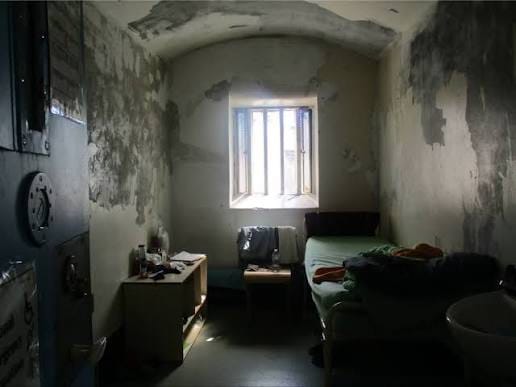
The conditions were bleak. It was an old Victorian cell with no window to the outside. I had one sheet, bitter cold, and almost nothing except my own thoughts. But I also had a Bible.
And that changed everything.
In that segregation cell, for the first time in my life, I actually read scripture seriously. I was not reading snippets, not repeating slogans, not borrowing religious language to decorate hatred. I was reading properly. And in reading it, I began to understand the history of the Jewish people in a way I never had before. I encountered Abraham, Isaac and Jacob not as props in some ideological argument, but as part of the story of God’s covenant. I read the Hebrew scriptures and saw, perhaps for the first time, that the Jewish people were not some demonic force in history but a people bound up with the entire drama of salvation. I saw that Christ himself was a Jew, that the apostles were Jews, that the roots of Christianity are Jewish, and that you cannot claim to love Christ while hating the people through whom God chose to reveal so much of His redemptive purpose.
I came to believe, in a deep and personal sense, that the Jewish people are God’s chosen people — not as a slogan, but as part of the biblical story of covenant, exile, survival and promise. And with that came a radically different understanding of Israel. Israel ceased in my mind to be some satanic outpost or conspiratorial invention. Instead, I began to see the Jewish return to their ancestral homeland through the lens of scripture, history and survival. I had previously treated Israel as a symbol onto which I could project all my hatred. In that cell, reading the Bible, I began to understand why so many Christians see the restoration of Israel as bound up with the faithfulness of God to His promises and with the long, battered continuity of the Jewish people through history.
That was my great epiphany. More than that, it was the moment I would describe as being saved. It was the point at which my hatred finally began to lose its hold. I became closer to Christ in a real way, not as a badge, not as a tribal marker, but as Lord. And once that happened, the old ideological edifice could no longer stand.
After that, I reached out for help. I undertook the Healthy Identity Intervention, known as HII, an HMPPS programme designed specifically to address the social and psychological drivers of extremist offending and to support desistance and disengagement from extremism. It is a one-to-one intervention that helps offenders build stronger pro-social identities and find belonging, recognition and purpose without recourse to extremist ideology.  I was involved in that process for roughly two years, continuing well into my eventual release in 2018, when I was 25.
That work mattered because it helped put structure around what had already begun spiritually and morally. It forced me to examine identity, grievance, belonging, masculinity, anger, purpose and the way ideology had functioned as an emotional crutch. It helped me understand that antisemitism had not really been about Jews solving the mystery of the world. It had been about me refusing to face the mystery of myself. It had been about moral cowardice. It had been about taking my failures, losses, confusion and bitterness and hanging them around the neck of an ancient people.
After my release in 2018, at the age of 25 turning 26, I began working in counter-extremism. Over the years that followed, I delivered seminars and training sessions across the country on the dangers of antisemitism and extremism. I used my own story as a warning. I delivered sessions to police, probation and other professional organisations. I worked to explain how antisemitism operates, how conspiracy thinking metastasises, how grievance can be weaponised, and how people who seem ridiculous from the outside can become dangerous when hatred gives them a sense of mission.
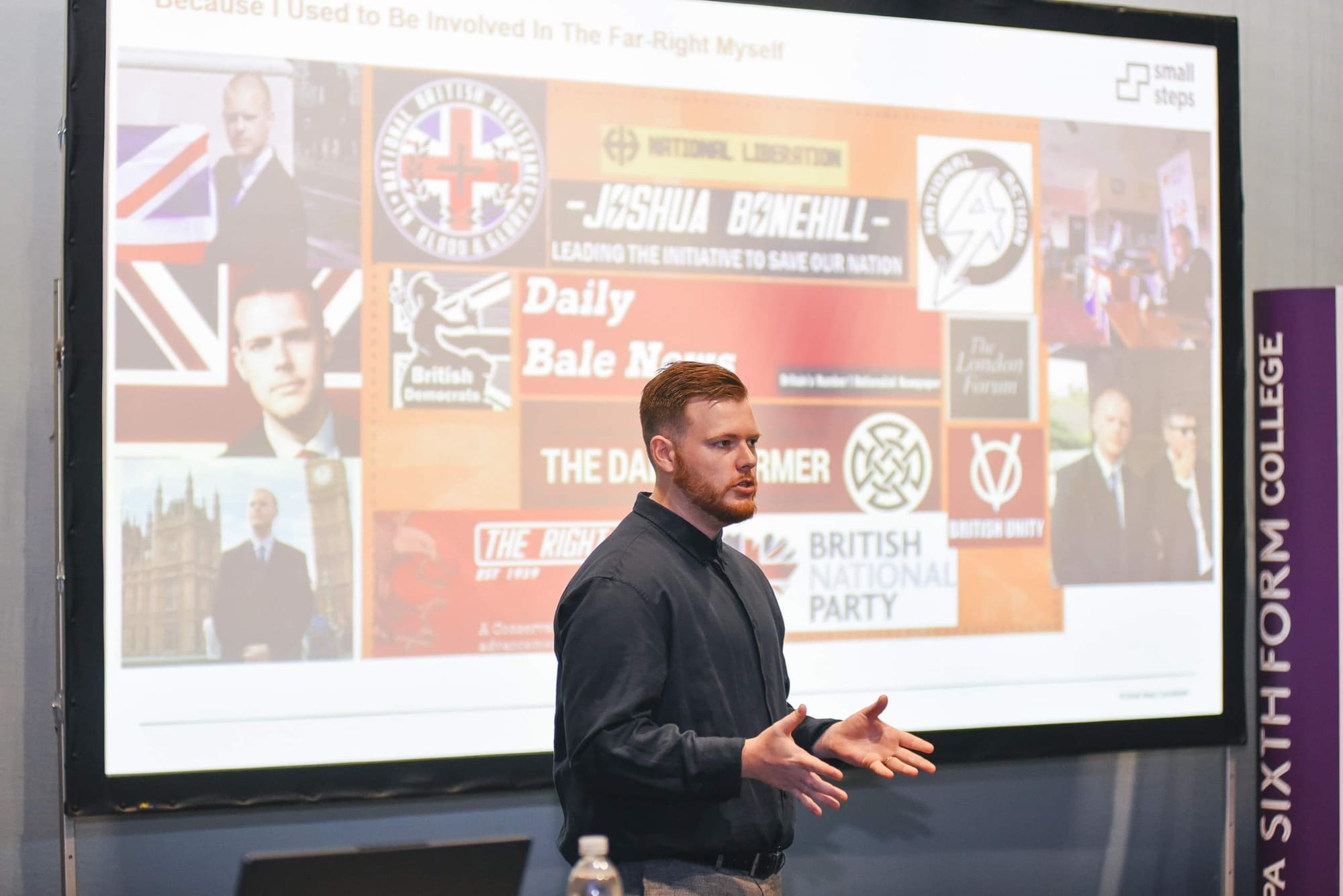
That, to me, is why antisemitism must be understood not as some quaint eccentricity or merely as a by-product of strong opinions about current affairs. It is one of the most adaptive hatreds in history. It survives by changing costume. It can dress itself as nationalism, anti-capitalism, anti-globalism, anti-racism, anti-imperialism or anti-Zionism. It can live on the far Right, the far Left, inside radical religious movements, or within pseudo-intellectual subcultures. But the mechanism is much the same: Jews are made to stand for whatever the believer most fears, most resents, or most wishes to blame.
I know that because I lived it.
And I know something else because I lived that too: it can be broken. Not cheaply, not theatrically, and not by slogans. It is broken by consequences, by truth, by ordinary human contact, by spiritual confrontation, by moral responsibility and, in my case, by Christ.
What began when I was 21 as grievance masquerading as insight ended, by the grace of God, in the collapse of a lie. A worldview built on arrogance died in disgrace, and from that disgrace came the first real chance I had ever had to become honest.
Life after Antisemitism
Since leaving prison, my life has been rebuilt in ways I once would not have thought possible. In 2020, my first son was born, followed by a second in 2021 and a third in 2024. Three boys — and with them a depth of love, duty and perspective that I had never known in my younger life. Fatherhood has a way of stripping away illusion. It forces you to think not in slogans or grievances, but in responsibilities, examples and inheritance. It makes you ask what kind of man you are, and what kind of world you are helping to leave behind.
I was also fortunate enough to spend considerable time in America between 2022 and 2023, particularly in California, where I met many genuinely wonderful people. I have travelled in Italy and elsewhere in the world too, sometimes through work and sometimes through a simple desire to understand life, people and places more fully. All of that widened my view of the world. It reminded me how easy it is, in bitterness, to reduce humanity into categories and enemies — and how false those categories so often are when confronted by real human beings.
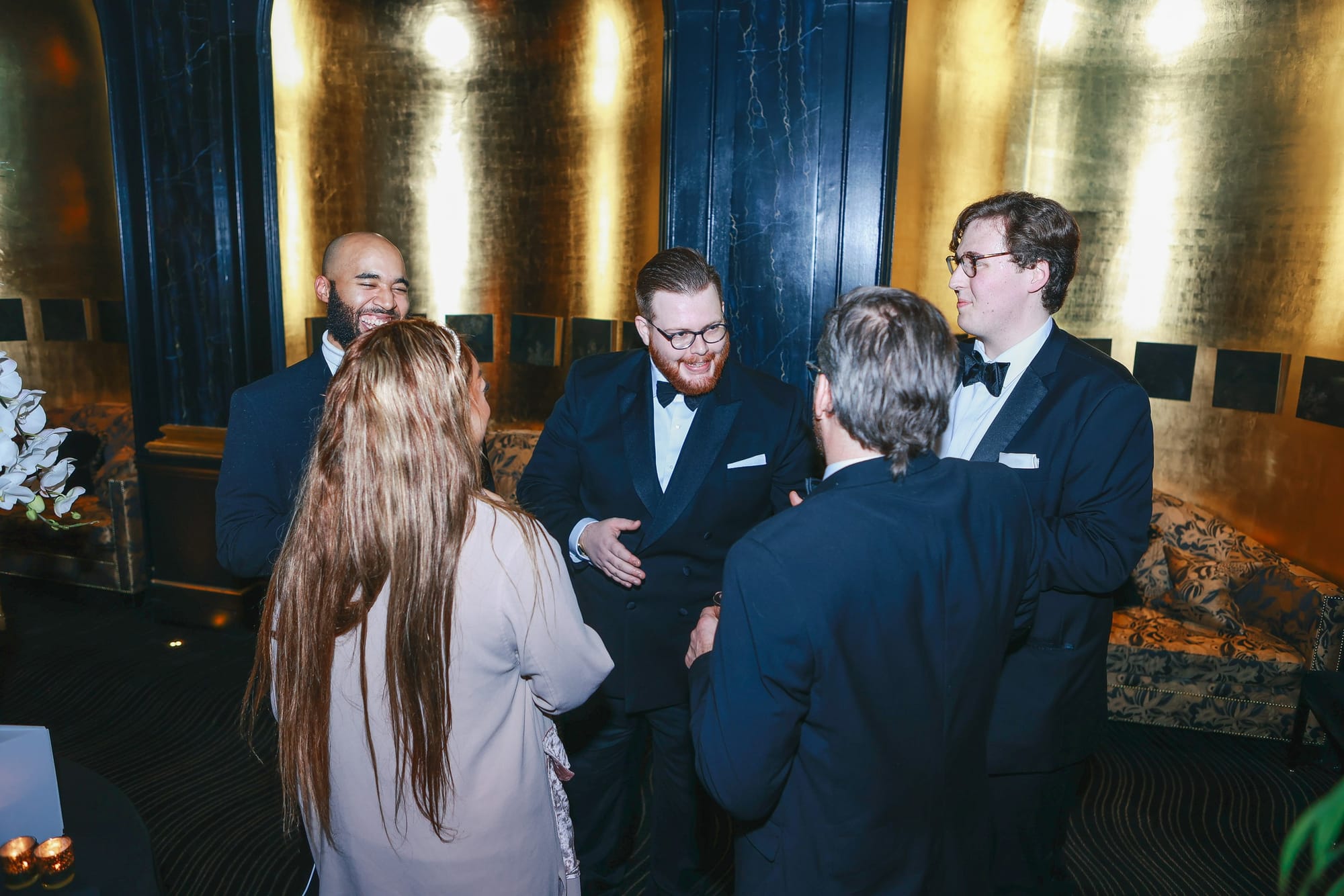
Then, in 2025, I founded The Crewkerne Gazette. In its own way, that too was part of the rebuilding. It gave me a platform, a voice, and a creative outlet through which to engage with the world rather than merely rage against it. For all its satire and humour, it also represents something serious to me: the fact that it is possible to come out of darkness and create rather than destroy.
And perhaps that is the final truth. Antisemitism narrows the soul. It reduces the world to obsession, blame and hatred. Redemption does the opposite. It opens life back up again — to faith, to family, to work, to travel, to responsibility, and to the extraordinary possibility that even a man who has gone badly wrong can still, by grace, build something good.
Joshua Bonehill-Paine